I’ve Got Mail: It’s a Small World – Part One

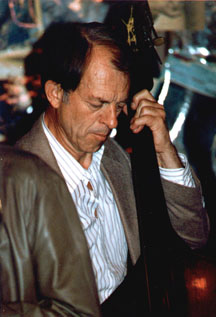
Bill CrowThe jazz family is of the large extended variety, and that makes the jazz world very small, connecting people with much less than six degrees of separation. So it should not come as any great surprise that Rifftides and DevraDoWrite share quite a few readers in common. One of the people who found me by way of Rifftides (thank you Doug Ramsey) is bassist Bill Crow.

Bill Crow was a musical chameleon in his youth, playing trumpet, baritone horn, alto sax drums, and valve trombone. He didn’t take up the bass until he was in his early 20s. Within a few years he was playing bass with Stan Getz, Marian McPartland, and Gerry Mulligan, to name just three, and he never looked back. That was in the 1950s. His credits as a writer also date back to the 1950s with his record and book reviews for Jazz Review. In 1991, Oxford University Press published Jazz Anecdotes, a collection of Bill’s stories that was voted Best Jazz Book of 1991 in a Jazz Times readers’ poll. Two years later, they published a second volume, From Birdland to Broadway: Scenes from a Jazz Life

I’ve known Bill (or more accurately, Bill has known me) since I was a little kid — at one time my dad sublet Bill’s apartment at 22 Cornelia Street. Bill also has a connection with Marian McPartland (about whom I recently wrote) as he was the bassist in the McPartland Trio when it was named “Small Group of the Year” by Metronome (1955). Also, coincidentlly, in the same issue of The Washington Post wherein Terry Teachout recommended the Alec Wilder book that prompted me to talk about Marian a few days ago, Jonathan Yardley recommended Bill’s book (read it here).

So what’s Bill Crow up to now?

I’m playing a lot with a guitarist named Doug Proper, who lives in upper Westchester County. Good drummer, Gerry Fitzerald, and the fourth member of the group is often Joe Beck, who is a monster guitar player.

When Joe can’t make it, we sometimes have John Abercrombie, and sometimes a good alto player named Andrew Beals.

Tonight I’m driving up to the New Paltz area to play with the Kansas City Sound, a band that reveres the Old Testament Basie book. Harvey Kaiser, a saxophonist, is the leader, and we often have Eddie Bert on trombone, Fred Smith on trumpet and a variety of piano players.

Last week I subbed for Earl May on a band that plays the old Ellington repertoire, so I’m getting my nostalgia kicks. I really know how to play that music, so it is nice to be asked to do so.

If you noticed that I didn’t give you a link to Jazz Anecdotes, that is because Bill also happened to mention that Oxford has asked him to make a revised edition.

I’ve added a new preface and about 150 new stories, and they’re going to put it out with a slightly altered cover, calling it “Jazz Anecdotes, Second Time Around.” Should be ready this fall, I think.

I’ll be looking for it, meanwhile you can get a taste of Bill’s stories online in his monthly Band Room column for Local 802’s Allegro. (You’ll have to click on Publications and select Band Room for your search.)

Milestones & Quotes

Well, this is my fiftieth post on DevraDoWrite and the end of my seventh week as a blogess. I hope you enjoy reading my posts as much as I am enjoying writing them.

Apropos of everything and nothing, but especially recent postings on the writing life, here are two quotes:

“…the power isn’t in the memory of the story; the power is in the telling of the story. The telling is what holds the moment, makes it immortal.” — Walt Harrington, The Everlasting Stream

“…the essayist-the creative nonfiction writer-must also be a thinker, a critic, and a social commentator.” — Lee Gutkind, The Art of Creative Nonfiction

The title of chapter eight in Gutkind’s book is also a phrase worthy of contemplation: “Think Globally, Act Locally.”

P.S. I’m off to hear a wonderful trio led by bassist Ron Carter with Mulgrew Miller on piano and Russell Malone on guitar. If you live in the greater Los Angeles area, you’ve got to get to The Jazz Bakery to hear them — they’ll be there through Sunday.

Life Is What You Make Of It

As I have been wrestling with ideas for a memoir (earlier memoir musings here), I found it of particular interest when Cup of Chicha took exception to a piece in the Seattle Post-Intelligencer titled “Confessions of a writer who didn’t pen a memoir.” She wrote:

I have no problems with D. Parvas’s disdain for “wasted youth” memoirs (Smashed: Story of a Drunken Girlhood, Runaway: Diary of a Street Kid, Rolling Away: My Agony With Ecstasy), but I’ve a number of problems with Parvas’s plot-based prescription for the genre…
As one who reads for thoughts and language and rarely plot, I’d like to suggest that the boring and insignificant among us can sometimes write worthy memoirs, too….

Although I don’t think that anyone is boring or insignificant, I basically agree with her in that it’s not necessarily what we’ve done that is of value. Vivian Gornick may have said it best in the foreword to “Living to Tell the Tale,” by Jane Taylor McDonnell:

“…what happened to the memoirist is not what matters; it matters only what the memoirist makes of what happened.”

The rant against memoir is an old one. In October of 1997, Vanity Fair ran James Wolcott’s article titled “Me, Myself and I,” wherein he denounced the “me-first sensibility” of memoirists, calling them “navel gazers.” Of course myopically self-involved and/or insufferably solemn writers who confuse honesty with confession do exist, and I won’t be reading their words. But as Lee Gutkind points out in his own memoir Forever Fat: Essays by the Godfather

there’s also an explosion of altogether brilliant nonfiction prose being written today by people who can reveal their feelings or the feelings of the people about whom they are writing while communicating compelling information and striking some sort of universal chord.

Universality seems to be the key. So what compelling information have I to share, and what universal truths can I tap? I must discover the answers to those questions before I can craft a reader-worthy tale. The memoirist’s job is “to lift from the raw material of life a tale that will shape the experience, transform an event, deliver wisdom” (Vivian Gornick) “such that the minutia of living becomes the meaning of life” (Walt Harrington, The Everlasting Stream).

Rifftides

“Diablog” — wish I’d thought to coin that word. I don’t know that he’s the first, but I just read it on Doug Ramsey’s new blog site called Rifftides. If the first day’s offerings are any indication, and I’m sure that they are, this site is going to tie with About Last Night as my absolute favorite. In the spirit of full disclosure, Doug is a good friend with whom I share a love of jazz, journalism and je ne sais quoi prose. Go see for yourself.

I’ll Be Around

One of the things I love about the blogosphere is the chance encounter with old friends; it’s like strolling to the store for a quart of soy milk and bumping into someone you haven’t seen in ages. Of course, out here in Altadena, we don’t stroll to the store, but you get the idea. Anyway, this morning I was delighted to run into Alec Wilder, courtesy of Terry Teachout and The Washington Post .

I used to go night after night to hear Marian McPartland play at The Cookery, and in later years at Bemelmans Bar at the Carlyle Hotel. She and Alec were close friends and he was in attendance more often than not. Alec was usually alone, and after Marian introduced us, and he was satisfied that I was really there to listen and appreciate the music, he would invite me to sit with him.
Alec & Marian, 1976
He had a gruff exterior that completely evaporated when he smiled. I thought him to be rather professorial, with his tweed jacket and pipe, always a book or two on hand, and forever scribbling notes to himself. Back then, my knowledge of Alec’s musical work was limited to familiarity with a handful of songs that he wrote and which Marian often played — I’ll Be Around, While We’re Young and It’s So Peaceful in the Country being a few of the most well-known.

I wish I could have known him better, and longer. Thinking about those times led me to my bookshelf for a visit with Marian via All In Good Time her book of autobiographical essays about some of the people she’s known — Alec Wilder: The Complete Composer is the title of the last chapter. Marian describes the first song that Alec wrote for her:

He airily tossed me a sheet of music, on which was written, “Jazz Waltz for a Friend — a small present from Alec Wilder.”

I was delighted, and I couldn’t wait to play the piece. It had a haunting melody, which had a way of turning back on itself that I found fascinating. It was deceptively simple to play, yet hard to memorize and improvise on. Many of Alec’s pieces are that way, but they are rewarding, for as you delve into them and explore their intricacies, you find fresh ways to go. Jazz Waltz for a Friend became a part of our trio repertoire, just as Alec became part of my audience from them and on.

One of my favorite CDs by Marian is her solo concert Live at Maybeck Recital Hall, and the last track is, you guessed it, Alec Wilder’s I’ll Be Around.

No Man Is An Island

In Culture in the Age of Blogging (read it in Commentary), Terry Teachout writes of

…stand alone journalists,” a term that refers to self-publishing, self-supporting professional journalists who are unaffiliated with the MSM [main stream media].

He then takes the discussion beyond the blogosphere and goes on to write:

In an analogous development, professional artists have started using the web to market their wares without resort to distributors or other middlemen…

and cites Maria Schneider’s recording project via ArtistShare as an example of how it can be done.

The phrase “other middlemen” led me to think about another issue, one that, while not directly on point vis a vis the Teachout piece, is no less important. If you read my recent posting about ArtistShare then you know that I am a supporter of this business model and I love the idea of focusing on the creative process instead of the final product. I will not lose any sleep or shed any tears when distributors and rack-jobbers become obsolete — I haven’t set foot in a record store in many years and my trips to bookstores grow fewer and fewer — but I do worry about a different group of middlefolk: sound engineers, graphic artists, text editors, and others whose skills add value to an artist’s original creation. No artist should go it all alone, unassisted, although many think that they can, and therein lay my misgivings about this do-it-all-yourself-with-technology age in which we live.

A few versatile artists may be supremely talented on multiple fronts, but culture consumers beware when singers and musicians and writers start mixing their own audio, designing their own packages, and editing their own words. The idea of self-sufficiency brings with it feelings of power and control; it can be quite intoxicating, and it can save you money too. I myself am not immune to the lure, and have been giving a lot of thought as to how I might apply such a model to my own writing career. But hopefully artistic considerations will prevail over commercial concerns. Before I sign on to become my own chief cook and bottle washer, I will take a good look at my own skill set and ask myself if I am really the best one for the job. More likely than not, the answer will be “no.” Besides, technology-enabled fissiparous tendencies be damned, creativity benefits from collaboration, and I can use all the help I can get.

Yippee!!! I’ve been blogrolled.

I feel like I’ve been knighted by the King of Arts Blogdom, none other than Terry Teachout. If you’ve come to me via About Last Night, thank you for taking the time to visit. Music, books, good works, and other reasons for living – that’s what this blog is about. In other words, whatever is on my mind – snapshots of my life as a writer and a reader, a listener and a watcher, a wife and a daughter. The categories under which these musings, opinions, and commentary are filed include Boos & Bravos, Notables, Hmmm…, Word Play, Writing Life, Reading Life, I’m All Ears, Jazz Ears, Date Specific, and This ‘n’ That. I post five days a week, usually in the evenings (California time), and while I do not plan to allow readers to post comments directly, I do welcome your emails. Only one thing can make me even happier than getting a nod from a much respected colleague and that would be reader feedback. Please stop by often, and let me hear from you.

Canadian Brass

Have you ever heard the Canadian Brass play? Not only do they play wonderful classical chamber music, they also play great jazz, and Luther Henderson is the man reponsible for hundreds of their “jazz” arrangements. I am working on a biography of Luther’s life, and I didn’t know much about his relationship with the Canadian Brass unil after the fact. Here’s a brief excerpt from my introduction — I was describing a memorial concert/gathering that took place in Los Angeles almost a year after his death:

The most amazing performance of the afternoon came from the Canadian Brass, a primarily classical ensemble of five musicians. They began their tribute to Luther with an appropriately jazz-tinged rendition of Amazing Grace, after which Billie playfully called out, “Who’s arrangement was that?” knowing full well that it was Luther’s. And Anne Edwards called out, “I bet he’s listening to you out there.”

Chuck, one of the trumpet players, spoke about how Luther was their “link between the [jazz] tradition and five guys who went to classical music school and studied Bach.” He explained how Luther’s belief in what was jazz differed from that of Wynton Marsalis. “Wynton made a statement that I think he subsequently softened – ‘if it ain’t improvised, it ain’t jazz’ – and Luther felt like the improvisations he could do for us would be an organized cogent improvisation that would then be codified. It would become the classical music that could be handed down.”

But Luther also loved what is commonly referred to as classical music, music in the European tradition by the old masters. Introducing their second piece, Chuck said, “Bach being very important to Luther, he requested somewhere along the line that it was our duty to perform the Toccata and Fugue in D minor in his honor, which we will fulfill this afternoon.”

The piece in question is a keyboard work, one with which Luther was totally familiar, and Chuck added, “I think he was amazed that we would play this at all on brass instruments.” Hearing a Bach piano piece rendered by two trumpets, a French horn, a trombone, and a tuba was certainly different, and Luther’s arrangement was both clever and delightful.

“We play Luther Henderson’s music every night,” Gene, the trombone player, told us. “He hasn’t missed a concert for at least twenty years. So we feel an attachment to him, and you can imagine it’s sort of emotional. Without Luther, there would have been no Canadian Brass. We feel that strongly.”

And with that, they launched into their final selection, an arrangement Luther had written for them early on, called Saints Hallelujah. Despite the fact that it was a memorial service of sorts, the atmosphere was festive, and I heard Billie say, “My favorite.” In this arrangement, the trombone leads off solo, and is then joined by the tuba. Meanwhile, the other three horns execute a few choreographed steps across stage, followed by an elaborately gesticulated preparation for what we anticipate to be their next musical entrance. They moved their horns toward their lips, but it’s a fake out, and instead of brass notes we heard them shout, “Hallelujah, Hallelujah.” The audience roared. Smiles were wide, even through an occasional tear, and that was how Luther would have liked it.

Creating a medley with When the Saints Go Marching In, a traditional New Orleans funeral parade song, with the classic Hallelujah Chorus, not only illustrates Luther’s humor and mischievous pleasure in tickling an audience, but it also epitomizes his desire to bridge the jazz and classical worlds. Luther agreed with his dear friend and collaborator, Duke Ellington, when Duke said that there are only two kinds of music: good, and the other kind. I thought about the work that Luther had done for Duke in the 1940s, and the monumental symphonic Ellington project he had completed for Sir Simon Rattle and the Birmingham Symphony in Great Britain just a few years ago. On the surface you might say that it began and ended with Duke, and while to limit it thus would be a disservice to the outpouring of Luther’s talent that filled the decades in between, it is true that Duke did play an elemental role in Luther’s career.

When I’m working on a piece about a musical artist I like to listen to their work while I’m writing. One CD that is now often playing in my office is the Canadian Brass’ Take the A Train: The Best of Duke Ellington You might also enjoy reading the tribute to Luther on the Canadian Brass web site.

Serendipity and a Grazing Addendum

Okay, so last night I didn’t state the most obvious linguistic connection between writing and breathing — inspiration, derived from French inspirer and Latin in+spirare, to breathe. It’s so darned obvious that I didn’t even think about it. Then this morning, using a few free minutes as I always do to click on a blog or online journal I haven’t seen in a while (it’s just not possible to keep pace with all of them all of the time), I stopped in at Speakeasy to see the Spring issue, clicked on an essay by Jim Heynen titled Faith in My Writing and found the following (emphasis added):

“…In faith, I wait for the gift of inspiration, the gift of an idea, the gift of an insight, the gift of the right word at the right time, even the gift of clarity. To be inspired means to breathe in the spirit. I can live with that notion of openness and receptivity. With faith, I wait for the gift, for what D. H. Lawrence called the wind that blows through us.
“Like most writers, I don’t know when that breath will come. I don’t even know if it will come unpolluted, free from depleted conventions and clichés. I can’t force inspiration. I can’t determine it (though I do have my little rituals), and when it does come it is like a gift that I hope will be worthy of readers.” (read the whole piece here)

If I believed in time warps and parallel universes and other such Star Trek realities, I would think that Heynen and I had been having a conversation, or that at least he had read my last night posting. But, being the pragmatic sort, I just believe that the universe I know is sending me a message. Especially when shortly thereafter I found myself reading an article about The Twin Cities in Publishers Weekly (June 6th) and see that the number one person on a list of leaders on the literary scene there is Linda Myers, longtime executive director of the Loft Literary Center. Significance? Speakeasy is a literary culture magazine published by The Loft. When all roads lead to Rome…

Grazing

I’ve been grazing on the pages of Bartlett’s Quotations and came across this from F. Scott Fitzgerald:

“All good writing is swimming under water and holding your breath.” (an undated letter)

When I think of swimming under water, which of course necessitates holding my breath, it evokes the sensation of a long journey, pushing through resistance to get to a destination where you can once again find some air. Engaging in this activty requires perserverence plus a measure of faith that your breath will be sufficient to get you there. Writing sometimes feels that way too.

On the other hand, I think there is a correlation between holding one’s breath and keeping strong emotions (especially the bad ones) at bay. Deflecting emotions such as sadness and pain might be useful as a survival tactic, but it can also lead to lackluster life and dreadfully dull prose. Quite simply, one must recognize pain in order to appreciate joy, let alone write about either. Or, as Alfred North Whitehead put it:

“Intellect is to emotion as our clothes are to our bodies; we could not very well have civilized life without clothes, but we would be in a poor way if we had only clothes without bodies.” (Dialogues of Alfred North Whitehead – ch 29, June 10, 1943)