
Off to Chicago early Wednesday morning. Thursday there’s an early evening concert in Millenium Park honoring Johnny Pate. Coincidentally, it was a year ago this Thursday that I posted a piece about a Johnny Pate tribute concert that had taken place two years prior (in 2003). This Thursday’s concert starts at 6:30 PM at the Jay Pritzker Pavilion and features a big band conducted by Johnny Pate and Henry Johnson’s Organ Express, plus Nancy Wilson as a special guest singing two tunes with Henry’s group and two with the big band. It should be a lot of fun. Then I’m heading straight home on Friday morning, and with the time change should get home mid day, just in time to finish the liner notes for a 2-CD compilation of Jim Hall tracks for Concord Records. What a life!
Author: Devra Hall Levy
To whom does one belong?
Yesterday’s Rifftides post Good Old Good Ones: Davis and Tjader includes the following tidbit:
In a pickup date while he and his bassist Eugene Wright were in Hollywood, Tjader brought in pianist Gerald Wiggins and drummer Bill Douglass. Everything clicked.
My tongue-in-cheek heading “to whom does one belong?” refers to Eugene Wright (a/k/a The Senator) being referred to as “his bassist,” meaning Tjader’s bassist. What was not mentioned was a small fact that gives “but of course” understanding to why “everything clicked” — Bill Douglas was Wig’s drummer and they’d been working together alot in the few years leading up to the Tjader recording. Here’s a snippet from my Gerry Wiggins bio:
Not only was Wig in demand as a sideman to play and record with jazz legends such as Milt Jackson, Art Pepper, Cal Tjader, Benny Carter and others, but during that same period he also recorded several albums as leader of his own trio. Wig’s first trio album, aptly titled “The Gerald Wiggins Trio,†was released in 1953. Wig, along with bassist Joe Comfort and drummer Bill Douglass recorded six standard tunes and two of Wig’s own original compositions. This same trio also recorded “The Loveliness of You†(Tampa, 1956). In 1957 both albums were re-released, the first by Dig Records under the title “Wiggin’ With the Wig†and the second by Motif Records under the title “Reminiscin’ with Wig.†Joe Comfort, who was working frequently with Nelson Riddle at the time, was not always available. On a date with Cal Tjader, Wig had met and worked with bassist Eugene Wright. Eugene may be best known for his later work with Dave Brubeck, but his musical contributions as a member of the Gerald Wiggins Trio were thankfully recorded on two albums: “Around the World in 80 Days†(Original Jazz) came out in 1957 (some sources say 1956) and “The King and I†came out in 1958 on Challenge Records.
The original liner notes for Around The World In 80 Days by John Tynan include this:
“By dint of many hours playing together, they have fused into a brotherly groove, the common bond of which is a mutual desire to “always keep it swingin’.”
So Eugene was Tjader’s bassist, Wig’s bassist, and Brubeck’s bassist, to name a few from the top of the list. Now, thanks to reissues, these groups all belong to us. Check them out.
PS: Writer Scott Yanow pronounced this recording “pleasant and swinging but predictably lightweight and not too substantial.” I know I am biased, but I love these recordings, so you’ll just have to decide for yourself. Amazon (use the link above) has audio clips for the 80 Days CD, as does allmusic.com.
Ten Good Years
A few weeks ago I mentioned a few of the things that helped me during my cancer battle. (You can read that post here.) I had planned to write something in commemoration of my ten year anniversary, but had not yet decided what date to commemorate—the date of diagnosis, the onslaught of simultaneous chemo and radiation treatments, the end of treatment, the post-treatment evaluation conjoined with another biopsy that supported a tentative pronouncement of “cured,†the date I felt “recovered,†or the date five years later when the doctors feel confident enough to use the word “cured†without caveats.
What I neglected to mention in that earlier post were some of the people who I saw and/or spoke to during that time. In addition to John, and my best friends, Phil, Susan and Tison, who stuck by my, chauffeured me, visited me, took me to doctor appointments and handled myriad other details for me, a few highlights stay with me always. Joe Williams singing Here’s To Life over the telephone, a phone call from Sonny Rollins (he told me that I wasn’t going to die), and hospital visits from Nancy Wilson and Lynn & Gerry Wiggins.
Then there was the time I was paroled from the hospital to be treated as an out-patient, discharged with a 24/7 iv chemo drip (they call it a pic line) with daily visits to the radiation center and to the lab for blood work. It was mid-June and Marian McPartland was in town to record. I drove myself to the O’Henry Sound Studios in Burbank and spent the day bathed in the sounds of Marian’s trio (Andy Simpkins on bass, Harold Jones on drums) plus a 20-piece string orchestra conducted by Alan Broadbent. It was a beautiful session with lush arrangements, a more perfect medicine for the mind and soul I cannot imagine. I spent a lot of time in the 1970s hanging out with Marian and listening to her play almost nightly at The Cookery and Bemelman’s Bar, so listening to tunes like Ambiance and A Delicate Balance took me back in time.
Then came the Playboy Jazz Festival, Joe was performing and I wasn’t going to miss it. Despite Sonny’s reassurances, I thought it might be the last time I’d ever see Joe. So John took me to the Festival in my big-brimmed hat (radiation treatments and sunshine are not a good mix) and chemo drip taped down to my side.
Outpatient treatment is a great idea, but I was getting too weak to handle it on my own. That’s when another girlfriend gave me a tremendous gift – she risked her job by taking a 2-week unpaid vacation and used up her frequent flyer miles to come in from Hawaii to stay with me. This friend had lost her husband to cancer so it must have been more than difficult for her, but she did not hesitate.
So what should I commemorate? The date of diagnosis has already slipped by me. The first biopsy was on May 15th and within a week I was in the hospital, had a tracheostomy, and “treatment†had begun. I could wait until July 29th to post this, that’s the day the treatment ended, but that’s also when the doctors tell you that they don’t know yet if the chemicals and radiation worked or not. Come back in six weeks, they said. I went to New York. It was mid-September when a third biopsy led the NY docs to say the cancer was completely gone, but that’s when they tell you they want to monitor your progress every month for the next year, every six months for two years after that, and then once a year; when five years have elapsed cancer-free then they might use the word “cured.â€
By now, the dates are no longer important; maybe they never were. The moral of this story is that people and music can make life better.
—
ps. Yes, Ten Good Years is the title of a song that Luther Henderson and Marty Charnin wrote for Nancy Wilson’s show at the Coconut Grove in 1964.
Tonite
Sunday, July 9, from 11 p.m. to midnight (Eastern Daylight Time) “Jazz From the Archives” features the music of Eddie Harris. You can hear it online www.wbgo.org, or if you are in the New York City metropolitan area you can tune in to WBGO-FM (88.3). Producer Bill Kirchner writes:
Eddie Harris (1934-1996) started his professional career as a pianist, but he became one of the most distinctive post-bebop tenor saxophonists, with an appealing airy sound and virtuoso technique. He achieved popularity through a number of commercial hits, but those who knew his playing well were aware that he was a first-rate jazz improviser.
We’ll hear some of the best of Harris’s Atlantic recordings of the mid-to-late 1960s, featuring him along with pianists Cedar Walton and Jodie Christian, bassist Ron Carter, drummers Billy Higgins, Bobby Thomas, and Billy Hart, trumpeter Ray Codrington, and others.
Jail or Jerry’s Kids
 A warrant has been issued for my arrest! I have been charged with having a big heart and will be apprehended on August 17th. As one of the “Most Wanted” I am going to be “Locked Up” to benefit the Muscular Dystrophy Association. You can help by contributing to my bail. They may even let me out on good behavior. My bail has been set at $1800, just enough to send three children to MDA summer camp. They tell me that I have an opportunity for immediate release for good behavior if bail is raised prior to the court date.
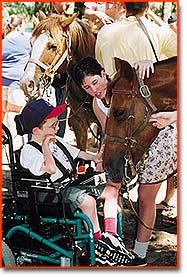
Don’t get confused. I have Multiple Sclerosis, not Muscular Dystrophy, but I have never felt right raising money for my own causes. And quite honestly, there are so many causes that I am usually immune to these solicitations. But these people got my attention with their novel approach (I think they are actually planning to send a car to “pick me up and take me away” on August 18th), and it is for children who would otherwise be denied a wonderful summer camp experience, an experience I loved but took for granted as a privileged and healthy youngster, so I agreed to participate. I can accept cash, check, or credit card donations (contact me via email if you want to send the donation c/o me), or you can donate online by going to this special page on the MDA website that is encrypted and protected by Verisign.
I promise that fundraising will not be a regular feature at DevraDoWrite, but it would be great if just this once you’d like to help out some kids who really could use a little joy in their lives.
Missing In Action Again
Sorry to have gone missing. I could plead pity for my infected jaw and my week on antibiotics, true and painful, but not so much so as to stop me from reading and writing, much of which this past week had to do with my ongoing class reunion — we now have a yahoo group and the conversations are many and varied, ranging from “do you remember so-and-so?” to how to save the world.
One of the topics I raised was actually a question my dad recently asked me: why aren’t today’s young people protesting against the war and the government? I mentioned that not having any children I feel rather far removed from “today’s young people,” but then wondered in writing, “and why aren’t we [protesting]? Are we too old, too complacent, too disillusioned….?” (As youngsters we were extremely political and outspoken. Not only did we attend marches in Washington and rallys in Central Park, we staged ourown mini-marches outside of FAO Schwartz protesting the sale of war toys. “GI Joe Must Go!”)
In response to my question, one classmate, an educator, reported having “escorted and travelled with groups of college-aged folk to several of the anti-war demos in the last few years. The demonstrations are FULL of young people; but there are way, way too few people, period. They are also full of people of our parents’ generation — but sorely lacking in folk of our own.” We ‘talked’ about our physical limitations, family obligations, and responsibilities that preclude the risk of jail for civil disobedience. Many of us sign petitions and discuss politics via the Internet, but as one classmate opined “I think we’re wasting our time getting distracted by the internet, when we should be on the streets. The kids are waiting for us to lead them there, and to join them there. They are waiting for us to organize the demonstrations, while we’re waiting for them to do so.”
I was glad to hear that there is more activity than is on my radar screen. I think the media downplays the protests today, at least I don’t seem to be as aware of them. Or maybe it’s just that they seem much smaller. Or maybe more activity on the East Coast? I’ve seen the occasional Los Angeles news report of some protesters, usually in Westwood (near UCLA), but they show only a handful of people with placards and drivers honking in support as they pass by. [Of course this is not counting the two recent immigration rallys and marches, but that was predominantly the Latino community mobilizing themselves…which is also a good thing] There are small protests against all kinds of things (movies, for example), and the opposers somehow find it easy to dismiss — “oh, it’s just them, not important, no big deal.” Also, those big protests back then were news while today they seem passe, a relic of an idea from the past, an idea that did not work…
I tell myself that there are many things I would do if I were single…part truth, part excuse. My husband, even though he is not about to join any picket line, says that when the middle class really starts hurting, then there will be a true revolution and we will all take to the streets. He figures that by then he won’t be here. Quite honestly, I find myself hoping that I’m not either. (I know that’s selfish, and easier for me to say because I have no children.)
That being said, I am not sure that protests in the street are any more effective than Internet petitions. Votes used to equate to power, but if They are controlling the elections (whether by lying or lobbying, rigging results, or just employing scare tactics), then even our votes don’t count. It’s a power and money game, and those who don’t have either can’t play.
—
Correction: A friend wrote in: “freudian slip?!?: “I mentioned that having any children I feel rather far removed from “today’s young people,” but then wondered in writing, “and why aren’t we?” Hmmm, I reply. Grandma always said “haste makes waste.” In a hurry to post, I failed to edit. The above has been corrected acordingly.
I’ve Got Mail: Animal World
Writer/Producer John Chacona writes:
In DDW this morning, you mentioned the Amy Sutherland book. As fate would have it, I listened to a podcast of an article by Ms. Sutherland just this morning. The print article from which the podcast is drawn is at:
The link John provides takes you to “What Shamu Taught Me About a Happy Marriage,” an article by Sutherland who is now applying to her husband the techniques she learned from the animal trainers. Hmmm….
According to let’s call this (JC’s website) writing about the arts doesn’t pay his bills but it does keep him sane. On his site you’ll find links to many of his writings, including this one:
Musical Royalty: Pianist Bill Charlap grew up in a household surrounded by musical greats, including his parents. (Erie Times-News ShowCase, 1 June, 2006)
Animal World
I picked up a brand new book that I’m anxious to read, but priorities for existing projects are trumping my desires so it may be a while before I get to dig into “Kicked, Bitten, and Scratched: Life Lessons at the World’s Premier School for Exotic Animal Trainers” by Amy Sutherland. Who knew that California’s Moorpark Community College trained animal trainers? Well, I guess Ms. Sutherland knew. She spent a year following around the students and, I imagine, the animals. A blurb on the back says “Sutherland introduces us to the controlled chaos of a training zoo, wherein students and beats strive to maniupulate eah other.” These are the kind of books I love, narrative nonfiction — true storytelling — that give you a look inside a world you never knew existed.
Like She Said
“I don’t think I can learn from a wild animal how to live in particular . . . but I might learn something of mindlessness, something of the purity of living in the physical senses and the dignity of living without bias or motive.” — Annie Dillard, Pilgrim at Tinker Creek (1973)
Reunion
I mentioned making a quick trip to New York earlier this month. It was a last minute decision to attend a school reunion. The fact that is was an elementary school reunion seems to be of much amusement to my friends from recent years. It wasn’t until I noticed their amused or bewildered reaction that I realized, or rather remembered, just how unusual, and privileged, my early schooling was — privileged for two reasons, neither of which being that it was a private school. The first reason is the school’s philosophy, described today on their website as follows:
“Education at the School is experience-based, interdisciplinary, and collaborative. The emphasis is on educating the whole child — the entire emotional, social, physical, and intellectual being — while at the same time, the child’s integrity as learner, teacher, and classmate is valued and reinforced.â€
The School for Children is a demonstration school for what is now known as the Bank Street College of Education. When it began in 1916 is was the Bureau of Educational Experiments, a research group founded by Lucy Sprague Mitchell. The group decided that they could best study child development, with the fewest restrictions, if they had their own school, so they started with a nursery school in 1918. Mitchell was not the only one with progressive ideas, a Dewey-esque learning by doing approach; her two colleagues, Caroline Pratt and Elisabeth Irwin also founded schools in Greenwich Village, City and Country School and Little Red Schoolhouse, respectively. And when BEE’s kids “graduated,†most continued their education at one of those schools.
In 1930 the school acquired and converted the old Fleishman’s yeast factory at 69 Bank Street, that was the building where we attended school, but it was not until the late 50s that they decided to start adding classes so that the oldest students could stay on…and so that they could continue to study us and train teachers in our classrooms. When we graduated from 8th grade we were only the third class to do so. We were 69 Bank Street’s Class of 69. We were a special group; I thought that then, and I still do.
The second privilege, likely a result of the first, is that my little class (class size was always small, about 18) was more like a family than a class, and that closeness became evident once again when we began to reconnect. Half of our class attended school together, grew up together, for nine, ten, and eleven years. Although most of us had not been in contact since our only prior reunion in 1994, and some had been out of touch since graduation, it was as if the intervening years melted away – the fondness of one another, the school, and I suppose our lost youth, coupled with curiosity, eroded any obstacles. Of course we are each closer to some than to others (as it was then, so it is still today), but if old sibling-like rivalries existed in the past, they are no longer evident and the strong bond forged in the 1960s remains today.
Soon after we graduated the school moved uptown, grew in size, and its attitudes changed with the times. Their focus shifted to their immediate operations and they lost track of and interest in their graduates. They even lost our records. We found that out when we organized our own reunion twelve years ago. Of course their interest peeked when someone told them of our 25th-year reunion and gave them addresses – suddenly they were interested…in our checkbooks.
Most of our teachers are gone now, a few retired or moved on to other careers, but many have died. They were the ones who, with guidance from the educators at the college, saw us through. We are happy to have also reconnected with Pearl Zeitz, our 7s teacher (we didn’t have “gradesâ€), and Peter Sauer, our science teacher who came on board during our last two or three years because parents began to get nervous about how we would fare in “the real world.†And of those no longer with us there are a few who we miss and remember fondly: Hannah McElheny (6s), David Wickens (8s), Betty Crowell (9s), Muriel Morgan (10s and 13s), and Hugh McElheny (music). The educators who studied us are long gone, replaced by administrators and fundraisers. I’d like to think that Lucy Sprague Mitchell, Barbara Biber, Edna Shapiro, John Neimeyer, and others at the College, along with our teachers, would have wanted to know how we, their experiments, turned out. I think they’d all be pleased.